
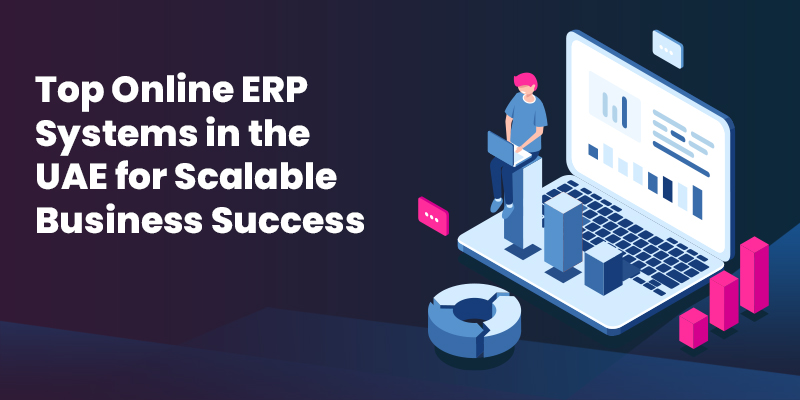
Migrating Large-Scale Legacy Systems to a Scalable Online ERP
The IT sector in the UAE is projected to reach $4.79 billion by 2029. It is now recognised as a global digital centre where several businesses are thriving in key sectors like energy, logistics, and IT. This advancement has prompted enterprises to shift to modern, scalable ERP solutions from fragmented legacy systems.
Not to forget the upcoming e-invoicing mandate by July 2026 that has come off as a declaration to completely ditch outdated software. Companies that are still hustling over confusing spreadsheets and patchwork solutions will fail to provide real-time reporting to the Federal Tax Authority (FTA), rendering their operations non-compliant overnight.
Why You Should Not Postpone Migration?
Legacy systems are often misjudged by enterprises that fail to identify their compounding inefficiencies. Manual data entry and siloed departments are not the only struggles associated with these conventional solutions, but they also drain organisational velocity.
Picture your finance team reconciling VAT manually and your warehouse operating on tribal knowledge. Add to that the poor decision-making at the managerial level due to old data that does not get updated automatically, and you have the perfect recipe for operational disaster. Suppose you take days to process an urgent purchase order, which would otherwise be possible to process within minutes using an online ERP. In that case, you are not just compromising productivity but also forfeiting market shares.
HostBooks understands that migration to a scalable ERP is more about operational resurrection and not just technology replacement. Our avant-garde online ERP solution is tailor-made for the dynamic business environment of the Emirates. Moreover, transitioning to a cloud-based, scalable architecture will eradicate unnecessary infrastructure burden and provide the much-needed agility to your business.
Why Traditional Migration Approaches Fail?
Talking about the conventional “big bang” migration that involves shutting down operations, leading to a complete system overhaul, is catastrophic for large-scale enterprises. HostBooks employs a phased migration methodology that maintains business continuity while systematically transitioning modules. This approach addresses three migration killers – data integrity loss, employee resistance, and regulatory non-compliance.
UAE businesses that manage multiple emirates’ operations and cross-jurisdiction VAT need a scalable ERP primarily for ease of management and operational speed. HostBooks’ online ERP has UAE-specific configurations that can handle multilingual documentation requirements, along with Arabic invoicing and Hijri calendar integration. Entrepreneurs do not have to worry about customisation issues that often plague generic ERP implementations.
The HostBooks Advantage
HostBooks acknowledges the fact that UAE businesses operate under unique pressures. Free zone entities need multi-currency consolidation. Trading companies require real-time inventory across Dubai, Abu Dhabi, and Sharjah. Service providers must track project profitability while managing sponsor requirements.
HostBooks’ online ERP delivers unified visibility and horizontal scalability irrespective of the number of transactions or branches your business has. Now that the UAE is ready to embrace the e-invoicing policy by mid-2026, migration should be a top priority as a key survival strategy for businesses. HostBooks’ online ERP gives you a compliance roadmap, ensuring your transition positions you ahead of regulatory curves rather than scrambling behind them.
Legacy systems weren’t built for the velocity and complexity of modern UAE commerce. Every day delayed in migration represents compounding technical debt. So, don’t be late enough to be forced into reactive compliance, be the leader of this transformation and partner with HostBooks today!



Leave a Reply